
Matcha is having its moment in the health, wellness, and clean beauty spaces. This smooth, grassy, sweet, and umami-rich, energy-enhancing elixir has also become a favorite of our In On Around team.
But, as always, we don’t just buy random matcha or even random organic or ceremonial-grade matcha powder off the shelves.
Instead, we’ve spent hours researching the best matcha powder that tastes amazing, is tested for common contaminants, and provides the most matcha-licious health benefits for your buck.
Keep reading to learn more.
Note: This article contains affiliate links, meaning In On Around will make a small commission at no additional cost to you. This helps us maintain the site. As always, we value full transparency & only work with brands we love and trust.
Author: In On Around Founder & CEO, Catherine Power.
- Published On:
- Updated On: March 2, 2026
Table of Contents
Summary:
- Matcha is an antioxidant-packed Japanese green tea made from partially shade-grown, whole ground tea leaves from the Camellia sinensis plant
- The growing process concentrates healthful active plant compounds, such as chlorophyll and antioxidants, while creating a unique flavor and various health benefits
- The best matcha powder comes from certified organic farms with a rich history of growing technique, is ceremonial grade, and is screened for purity (heavy metals, pesticides, radiation, and other contaminants)
- Best Brand = Pique Sun Goddess Matcha
What Is Matcha?
Matcha is a type of green tea that’s grown in Japan from the Camellia sinensis plant – the same plant that green and black tea come from.
Since the 12th century, it’s been the subject of sacred Japanese tea ceremonies (hence the term “ceremonial matcha”), was the favored beverage of monks and ancient samurai warriors, and is now one of the most popular forms of green tea in the West.
Matcha differs from green and black tea in the way it’s grown, processed, and prepared, all of which have earned it the title of the “healthiest” or the “ultimate green tea”.

Matcha Grades
Although there are many different types of matcha based on growing practices, harvest time, and processing, Matcha comes in three distinct grades. Keep in mind, though, that there are no regulatory bodies regulating these terms – so take them with a grain of salt.
- Ceremonial Grade
- Traditionally made from the young and tender leaves, stone-ground to avoid any heat from processing, and considered the highest quality matcha.
- It has a more delicate, sweet, and smooth flavor, a silky texture, and bright green color, and is considered the best for drinking “neat” (with nothing added). It’s also the form of matcha used in traditional tea ceremonies.
- Ceremonial matcha has more active plant compounds such as chlorophyll, L-theanine, and caffeine, and is the most expensive type of matcha.
- Today, some people drink ceremonial-grade matcha daily. However, it can be cost-prohibitive for many, which is why there’s daily-grade matcha.
- Daily Grade
- Considered the second-highest quality matcha, and the most versatile for lattes, cooking, baking, and everyday consumption.
- It also contains high amounts of L-theanine, caffeine, chlorophyll, and catechins, and is more affordable than ceremonial-grade matcha.
- Daily grade may also be used in lattes (sometimes called “latte grade”), as its stronger flavor pairs well with milk or sweeteners.
- Culinary Grade
- Considered the third highest quality, culinary grade has a more robust, astringent flavor that stands up to heat, freezing temperatures, different cooking techniques, and other ingredients.
- It also contains the highest amount of catechins and is less expensive than other grades, making it an ideal choice for baking, frozen desserts, and more.
Since we’re all about quality around here, we’ll share our top picks for the highest quality matcha, ceremonial-grade, as well as tips for vetting daily and culinary grade matcha.



Green Tea and Matcha: What’s The Difference?
Green tea and matcha are both ancient health-promoting beverages enjoyed in some of the world’s healthiest and longest-living cultures.
As mentioned previously, they both come from the same plant and contain many of the same beneficial plant compounds, such as:
- Polyphenols
- Catechins (including the widely-studied epigallocatechin gallate or EGCG)
- Amino acids like L-theanine
- Chlorophyll
The primary difference between green tea and matcha lies in how the plant is cultivated, processed, and served.
Green tea is grown in open fields, harvested, and then quickly dried to preserve its delicate flavor and color.
It is traditionally prepared as an infusion by steeping the tea leaves in hot (not boiling) water, then straining before serving.
Matcha is also grown in open fields, but then shaded for part of its growing season. This helps concentrate specific nutrients, like chlorophyll, antioxidants, and caffeine, while preserving its rich green color and minimizing green tea’s natural bitter flavor. [1]
Once harvested, the whole matcha leaf is pulverized into a fine powder, which is dissolved in hot water or milk when served, versus being strained, like traditional tea.
You can learn more about green tea here: 15 Green Tea Tips: What Green Tea Is The Best For Weight Loss?
FREE Download:
Beginner's Guide to Holistic Health
Get 16 actionable tips to start making healthy, non-toxic swaps. Enter your name and email below.
Health Benefits Of Matcha - The Ultimate Green Tea
Green tea and matcha both offer a wealth of health benefits.
However, studies have shown that matcha contains more concentrated amounts of ECGC, the antioxidant known for its health-giving properties.
For example, a comparison study published in the Journal of Chromatography found Matcha had 137 times greater concentration of ECGC than China Green Tips green tea and had at least three times greater ECGC than other types of green tea. [2]
Matcha also has a higher concentration of chlorophyll, which promotes detoxification and healthy blood, and contains various nutrients, including iron and vitamin C.
Studies have demonstrated that these active plant compounds offer a wide range of health benefits, including: [3, 4, 5, 6, 7]
- Supporting heart health
- Reducing oxidative stress
- Enhancing energy and alertness
- Improving glucose metabolism
- Potentially helping regulate carbohydrate metabolism
- Promoting skin health via its antioxidant properties and vitamin C content
- Reducing inflammation
- Supporting liver health and function
- Providing neuroprotective benefits
- Improving various aspects of cognitive function, such as attention, memory, and reaction time
- Offering potential anti-carcinogenic protection
- Immune support
Although matcha has been recognized as a healing beverage for centuries, research into its specific health effects is still emerging, but the findings are very encouraging.
On a personal note, one of the reasons I love drinking matcha versus coffee is that it gives me a nice, balanced energy boost without the jitters or caffeine crash.
This is likely due to the high concentration of L-theanine, which has naturally calming and focus-enhancing properties.
I also like that it offers other protective and anti-aging nutrients, like chlorophyll and iron, making it a more functional beverage, IMO.

How Much Matcha Per Day is Healthy?
Matcha is generally safe for most people to consume daily, and in some traditions, it is even consumed multiple times a day.
However, keep in mind that it contains more caffeine than other forms of green tea (approximately 19-44 mg per gram), so you’ll want to monitor its effects and avoid drinking it too close to bedtime.
Matcha, like other types of green and black tea, also interferes with iron absorption from food.
So if you’re anemic or iron-deficient, you’ll want to space it out from your meals or iron-containing supplements.
I enjoy matcha once or twice a day as a substitute for coffee, but I cut myself off around 3 PM to avoid sleep issues.
The Cleanest And Best Matcha Powder I Use Every Day
Okay, now that you’re a burgeoning matcha expert, let’s get to the good stuff: the cleanest and best brands!
Here’s our criteria:
- Authentic, highest-quality, ceremonial grade (because it tastes the best!)
- We’ll also share an option for daily grade, aka: latte grade
- 100% organically and traditionally grown
- Purity tested for heavy metals, pesticides, mold, and radiation (yep, that’s a thing in Japan!)
- Grown in pristine, remote locations by experienced matcha growers
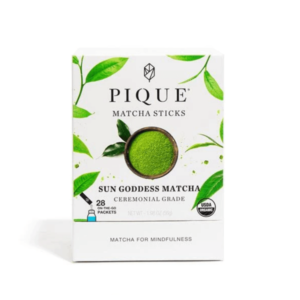
This is our top pick because it is the best matcha we’ve ever tasted (smooth, grassy, sweet, floral, and never bitter) and exceeds our criteria.
Why We Love It:
- 100% organic
- Ceremonial grade
- Grown by third-generation teamasters, using 130-year-old techniques.
- Sourced from Kagoshima, a lush valley at the southernmost tip of the Japanese archipelago, far away from environmental toxins
- Shade-grown for 35% longer to concentrate its phytonutrients
- Tested for heavy metals, mold, pesticides, and radioactive isotopes
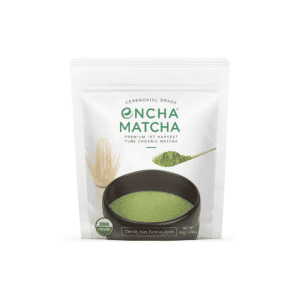
Encha is another excellent matcha brand available on Amazon. The flavor is great, and we love how it blends seamlessly into lattes with a smooth, creamy texture.
Why We Love It
- 100% organic
- First harvest (which is generally the best tasting and highest in nutrients)
- The ceremonial-grade is first harvest premium, and the latte-grade is first harvest standard, which has a stronger flavor that pairs well with milk, like daily matcha grade
- Grown in the pristine and rural Uji mountains in the Kyoto prefecture in central southern Japan
- Tested for radioactivity
- Tested for lead and heavy metals at CA Prop 65 limits (learn more here)
- Encha has also been tested by Time Magazine, which showed no heavy metals or pesticides in their products
- Easy ordering direct or through Amazon

This is a new brand for us, but we really like the flavor, quality, and company ethos. Definitely a top pick worth trying.
Why we love it:
- The organic matcha is 100% certified Organic
- JAS certified (Japan’s organic certification)
- Grown using regenerative agricultural practices (a step above organic that encompasses the health of the soil, waterways, workers, and more)
- Grown in the remote mountains of Shizuoka, Japan
- Triple tested for heavy metals and radiation
- Available in a 1-pound bulk bag
And That’s A Wrap On The Best Clean & Organic Matcha Powder
We hope it’s helped you get acquainted with this versatile healing beverage and choose a brand or two to try.
Do you drink matcha?
What are your favorite brands and grades? How do you use it (lattes, baking, or traditional)? Tell us about it in the comments below.
xoxo,

Want to read more? Check out our other articles here!
Other references on Matcha from: NIH: PMID: 32290537, PMID: 26309486, PMID: 28784536, PMID: 33375458,PMID: 36582446, PMID: 33375458, ScienceDirect: Determination of catechins in matcha green tea by micellar electrokinetic chromatography
Copyright In On Around LLC 2024 ©. The statements made on this website have not been evaluated by the FDA (U.S. Food & Drug Administration). They are not intended to diagnose, treat, cure, or prevent any disease. The information provided by this website should not be used as individual medical advice and you should always consult your doctor for individual recommendations and treatment. The information contained in this site is provided on an “as is” basis. Related to this site, there are no guarantees of completeness, accuracy, usefulness, or timeliness. In On Around LLC assumes no responsibility or liability for any errors or omissions in the content of this site.
Frequently Asked Questions - Best Matcha Tea Powder
You’ve just absorbed a LOT about how to choose the best matcha powder, but there’s always more to learn.
Here, we answer some of your matcha tea powder FAQs.
Click on the below FAQs to learn more about: Matcha, matcha, matcha tea, matcha powder, matcha health benefits, matcha vs green tea, organic matcha, matcha latte, matcha for weight loss, Japanese matcha, matcha antioxidants, matcha recipes, matcha skincare, matcha energy boost, matcha nutrition, matcha superfood, and matcha tea benefits.
Matcha can vary in flavor depending on its grade, harvest, and cultivation method. Generally, ceremonial-grade matcha has a lovely grassy, sweet, creamy, and umami flavor without the signature bitter or astringent flavor of green tea.
Other grades have a stronger, slightly more astringent flavor.
Generally, you use 1 gram of matcha per cup of water or milk.
Many companies offer pre-measured packets for easy use.
Matcha contains between 19–44 mg of caffeine per 1-gram serving, depending on the grade and how it’s grown and harvested. [8]
Green tea contains 11-30 mg per 1-gram serving.
Matcha has been enjoyed by millions of people for thousands of years as a ceremonial, healing, and everyday beverage.
However, it contains caffeine, which may not be appropriate for everyone, especially those who are sensitive, anxious, pregnant, have high blood pressure, or have other pre-existing health conditions, as well as children and pregnant women.
Check with your healthcare practitioner for individual recommendations.
As mentioned above, studies suggest matcha has more catechins and chlorophyll than green tea, which may enhance its health benefits.
Japanese-grown matcha also generally has fewer heavy metal issues than other green tea varieties grown in China, but it depends on where and how it’s grown.
However, both green tea and matcha are healthy beverages and offer similar health benefits.
If you like matcha, drink matcha; if you prefer green tea, always choose organic from a brand that tests for heavy metals and know you’re still reaping significant health benefits.