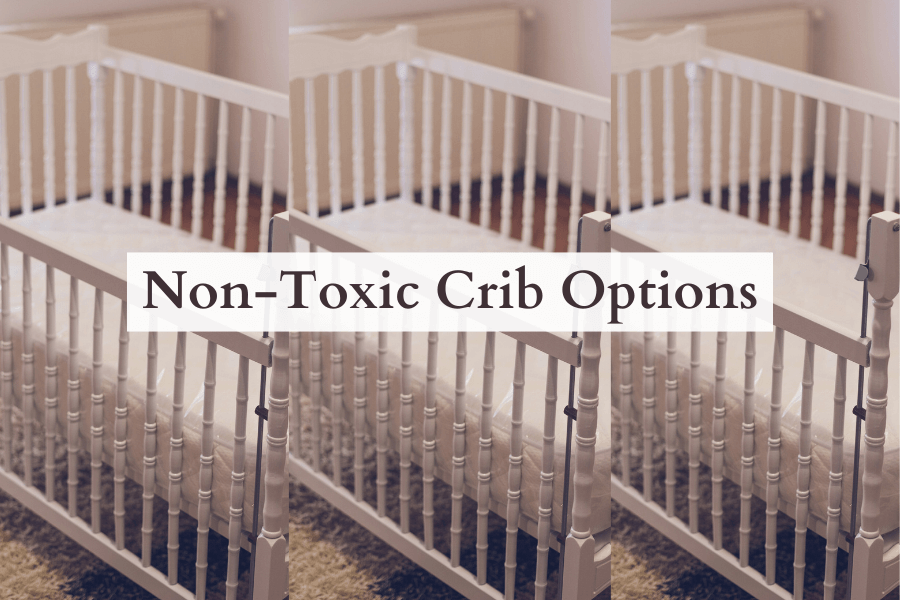
Creating a safe and nurturing environment for your baby is always a top priority… starting with where they sleep. Cribs are often seen as simple pieces of furniture, but what many parents don’t realize is that not all cribs are created equal when it comes to safety. Beyond sturdy rails and aesthetics, it’s crucial to consider what materials and finishes are used in the crib’s construction.
So let’s dive into why the switch to a non-toxic crib matters, beginning with a closer look at what’s hiding in many conventional models. What are the best non-toxic crib brands? What should you look for?
Keep reading to learn more.
Note: This article contains affiliate links, meaning In On Around will make a small commission at no additional cost to you. This helps us maintain the site. As always, we value full transparency & only work with brands we love and trust.
This article is co-authored by Kathlyn Carney and Catherine Power.
- Published On:
- Updated On: September 23, 2025
Summary:
- Many conventional cribs may contain harmful chemicals from engineered wood, synthetic glues, and toxic finishes.
- Non-toxic cribs made with natural, eco-friendly materials help create a safe, healthy sleep space for your newborn.
- Choosing the best non-toxic crib means paying attention to materials, finishes, and safety certifications. Today’s top non-toxic crib brands offer safe, stylish, and sustainable options that give parents peace of mind.
Table of Contents
Why Choose a Non-Toxic Crib for Your Baby?
Hidden Toxins in Conventional Cribs
Many standard cribs on the market are made with engineered woods, synthetic adhesives, and chemical-laden finishes. These materials can emit volatile organic compounds (VOCs), formaldehyde, and other toxic substances. Even seemingly harmless details like paint or varnish may contain heavy metals or phthalates (especially if babies/toddlers nibble on the furniture).
Health Risks of VOCs and Harmful Finishes
Exposure to VOCs and other toxins released by crib materials has been linked to a range of health concerns, particularly in infants and young children. Their developing lungs and immune systems are especially vulnerable to these airborne chemicals, which may contribute to respiratory issues, allergic reactions, and even long-term developmental effects. Choosing a non-toxic crib helps reduce these risks and gives your baby a healthier start from day one!
Benefits of Non-Toxic and Organic Crib Materials
There are quite a few benefits to choosing a more natural, non-toxic crib, such as:
- Improved Air Quality: Non-toxic materials reduce the release of VOCs, resulting in a cleaner sleep environment for your baby.
- Reduced Allergen Exposure: Organic fabrics and finishes are less likely to contain allergens that can cause irritation for your child.
- Peace of Mind for Parents: Knowing your baby is not being exposed to chemicals will help ease your natural parental worries, keeping you focused on caregiving.
- Gentle on Baby’s Skin: Organic cotton and untreated wood are softer, safer, and less likely to irritate delicate skin.
- Environmentally Friendly: Sustainable materials like FSC-certified wood and organic cotton support eco-conscious manufacturing practices.
- Durable and Long-Lasting: Non-toxic cribs are often crafted with high-quality wood and finishes, making them sturdy and built to last.
- Compliance with Safety Standards: Many non-toxic crib manufacturers strive to go above and beyond regulatory safety requirements, offering an extra layer of assurance.
All this said, it’s still important to have a high-quality air purifier in their nursery, which will help with additional VOCs. Learn more here: Best Air Purifier: Air Doctor Vs. Jaspr, Our Unbiased Review. And here: Are Ozone Air Purifiers Safe? Best Air Filter Buying Guide
What Makes a Crib Truly Non-Toxic?
While non-toxic cribs are the safest and healthiest option for your child, it can be difficult to understand exactly what makes cribs non-toxic. It’s important to know what to look for when searching for your child’s first bed.
There are key regulations, certifications, and materials to keep an eye out for to make sure that you are creating a non-toxic and safe sleeping environment for your child.
Key Certifications to Look For (GREENGUARD, JPMA, etc…)
When it comes to choosing a crib, safety isn’t just about sturdiness… it’s also about reducing your baby’s exposure to potentially harmful chemicals. There are specific certifications to keep an eye out for throughout the crib purchasing process.
In the U.S., all cribs must legally comply with Consumer Product Safety Commission (CPSC) regulations. These regulations focus on structural crib safety, and they prevent extreme chemical hazards like high levels of lead and phthalates.
The Federal Consumer Product Safety Improvement Act (CPSIA) of 2008 lowered permissible lead in paint to 0.009% and restricted eight types of phthalates in children’s products to under 0.1%, protecting infants from these dangerous endocrine-disrupting toxins.
Beyond the basic federal standards, there are several voluntary certifications that indicate that a crib has gone the extra mile in safety and toxin reduction:
- ASTM Standards: These standards were developed with input from engineers, consumer advocates, and manufacturers. They provide technical guidelines for crib construction, durability, and material safety.
- JPMA Certification: Offered by the Juvenile Products Manufacturers Association, this certification ensures cribs meet ASTM standards through independent annual lab testing. It primarily focuses on structural safety, with some additional checks on materials.
- CARB II Certification: This California Air Resources Board standard regulates cribs made with composite or engineered wood. It limits formaldehyde emissions to extremely low levels (0.05 – 0.11 ppm depending on the wood type), reducing potential carcinogenic exposure.
- Greenguard Gold Certification: This rigorous certification ensures low emissions of volatile organic compounds (VOCs) like formaldehyde, benzene, toluene, and others. It even goes beyond CARB II by testing both the product and its manufacturing process. However, it’s important to note that “Greenguard Gold” does not mean a crib is completely free of VOCs, but it ensures that emissions are below strict thresholds for indoor air safety.
- OEKO-TEX Standard 100: Guarantees that every material used is free of harmful chemicals. This includes finishes, threads, glues, and more.
FREE Download:
Beginner's Guide to Holistic Health
Get 16 actionable tips to start making healthy, non-toxic swaps. Enter your name and email below.
Safe Materials: Solid Wood, Water-Based Finishes, and More
The materials and finishes used in crib construction can make a big difference in your child’s long-term health and indoor air quality.
1 - Choose the Right Wood
Your best bet is solid, sustainably sourced hardwood – kiln-dried and either unfinished or finished only with natural oils like food-grade linseed oil or beeswax. These options are naturally durable, non-toxic, and long-lasting without the need for harsh adhesives.
Best woods for a non-toxic crib:
- Beechwood
- Hickory
- Oak
- Maple
- Cherry
Woods to avoid: Cedar, Douglas fir, juniper, pine, redwood, and spruce. These softer woods are more prone to dents, may contain natural resins that can off-gas irritants, and are often paired with toxic finishes or veneers.
Avoid altogether: Engineered woods such as particleboard, plywood, MDF, or hardwood veneer. These often rely on formaldehyde-based glues, a known carcinogen, and can emit volatile organic compounds (VOCs) into your baby’s environment.
It’s best to avoid metal cribs (as they could potentially increase electromagnetic fields). [1]
2 - Be Picky About Finishes
Many cribs (especially those made from cheaper materials) are coated with paints, stains, or glues that contain VOCs, phthalates, and heavy metals. These can slowly release harmful gases over months or years, contributing to poor indoor air quality and potentially causing respiratory irritation, hormonal disruption, or neurological effects.
Safest finishes to look for:
- Unfinished wood
- Food-grade linseed oil (without chemical drying agents)
- Beeswax
- Plant-based oils or waxes
- Water-based paints and stains that are explicitly zero-VOC and free from formaldehyde, phthalates, ammonia, toluene, heavy metals, and acetone
Non-toxic paint brands for cribs:
- Ecos Paints (Lullaby collection – zero VOC, nursery-safe)
- Benjamin Moore Eco Spec® (zero VOC & zero emissions, Green Seal Certified)
- Real Milk Paint (100% organic, VOC-free)
- Country Chic Paint (free from phthalates, formaldehyde, solvents)
- Milk Paint by Fusion (lead-, ammonia-, and formaldehyde-free)
- SAFECOAT (formaldehyde- and ethylene glycol-free)
3 - Build Quality & Safety Standards Still Matter
Even the safest materials can’t make up for poor construction. Always ensure your crib meets or exceeds Consumer Product Safety Commission (CPSC) standards, including:
- Hardware integrity: No sharp edges, loose screws, or wobbly parts
- Lead-free and phthalate-free finishes
- Slat spacing: No more than 2 3/8 inches apart
- Mattress fit: No more than two fingers between mattress and crib frame
- Corner posts: No higher than 1/16 inch unless part of a canopy design
For extra peace of mind, look for some of the third-party certifications that we mentioned before, like Greenguard Gold, CARB II, and OEKO-TEX Standard 100.
Pair it with the best organic non-toxic crib mattresses here.
Best Non-Toxic Cribs That Are Safe for Newborns (2025 Picks)
There are many great options to choose from when selecting a non-toxic crib for your baby. These cribs also ring in at different price points to fit your budgeting needs.
In our opinion, you can’t go wrong with any of these non-toxic options.
Best Budget Friendly

- Price Range: $159-$399
- Materials:
- Primarily made from solid New Zealand pine wood, one of the most renewable and sustainable sources of hardwood available.
- Occasionally, CARB II–compliant MDF or wood veneers are used in panels or drawers for added durability.
- Certifications:
- GREENGUARD Gold Certified: brand with the most Greenguard Gold certified baby furniture on the market
- Meets ASTM & CPSC safety standards
- Finishes & VOCs:
-
- Finished with a non-toxic multi-step staining and painting process
- Paints and stains are lead-, phthalate-, and formaldehyde-safe, with levels far below industry limits (less than 2 ppm vs. the required 300 ppm)
- VOC-Free
- Safety & Ethics:
-
- Every crib undergoes third-party CPSC-certified lab testing
- After initial approval, 25% of full-size cribs are tested quarterly to maintain ongoing compliance
- DaVinci is transparent about safety standards, including lead and phthalate content in all finishes
- Uses sustainable pine forests from New Zealand and Chile, with forestry practices that are expanding rather than depleting resources
- Most DaVinci cribs are convertible (most popular is Kalani 4-in-1)
- Pros:
- Budget-friendly compared to other non-toxic crib brands
- Made from sustainable New Zealand pine wood
- GREENGUARD Gold certified (low VOCs, tested for 10,000+ chemicals)
- Wide range of styles and colors to fit any nursery theme
- Convertible designs for long-term use
- Non-toxic paints and finishes with extremely low chemical content
- Transparent about safety and materials
- Meets and exceeds CPSC and ASTM standards
- Cons:
- Uses engineered wood (MDF/veneer) in some models (though CARB II compliant and safe)
- Pine is softer than hardwoods like beech, so dents and scratches are more likely
- Conversion kits (to toddler/full-size bed) are often sold separately, adding to cost

- Price Range: Around $119 – Affordable!
- Materials:
- Unlike most IKEA cribs that include engineered wood, MDF, or synthetic finishes, the Sniglar crib is made entirely of solid beech wood. It’s one of the very few IKEA products that avoids particleboard and laminates, making it a standout for parents looking for a more natural option
- Certifications:
- IKEA banned PFAS in 2016 across all products
- No added flame retardants (unless required by law in certain regions)
- Meets U.S. crib safety standards for slat strength, spacing, and durability
- Finishes and VOCs:
- The Sniglar comes unfinished—meaning there are no paints, varnishes, or lacquers on the wood
- Considered VOC-free since it has no finish at all
- Not convertible beyond lowering the mattress height
- Pros:
- Very affordable
- Made of solid beech wood (no MDF, particleboard, or veneers)
- Unfinished wood
- No PFAS, no flame retardants (unless legally mandated)
- Meets safety standards for durability and crib safety
- Lightweight and easy to move
- Simple, minimalist design
- Cons:
- Not GREENGUARD Gold certified
- Not convertible
- IKEA’s broader supply chain relies heavily on synthetics, even if this model is wood-only
- May not last through multiple children as well

- Price Range: $179.99-$599.99
- Materials:
- Primarily made of solid wood (often New Zealand pine or other durable hardwoods)
- Some models incorporate engineered wood for added affordability
- Certifications:
- Meets or exceeds ASTM & CPSIA safety standards
- JPMA certified (independently reviewed to ensure compliance with U.S. crib safety standards)
- Baby Safety Alliance Verified
- GREENGUARD Gold Certified
- Finishes & VOCs:
-
- Available in multiple finishes (white, espresso, black, gray, natural, and more)
- Finishes are low-VOC
- Safety & Ethics:
- Recognized with the Women’s Choice Award since 2018, showing strong trust from moms nationwide
- Gives back through charitable partnerships, including:
- One Tree Planted
- Ronald McDonald House
- Children’s Foundation of America
- Zajac Ranch for Children
- Most Storkcraft cribs are convertible, transitioning from crib → toddler bed → daybed → full-size bed
- Pros:
- Budget-friendly
- GREENGUARD Gold Certified
- Meets ASTM, CPSC, and JPMA safety standards
- Solid wood construction (with some engineered wood components for affordability)
- Convertible design offers years of use
- Wide range of colors and finishes
- Recognized with Women’s Choice Award multiple years in a row
- Company actively supports charitable causes
- Cons:
- Not 100% hardwood (some engineered wood used in certain models)
- Conversion kits usually sold separately
- Paint/finish durability may not be as long-lasting as premium cribs
Best Overall

- Price Range: $529-$899
- Materials:
- Made with Baltic birch and beech wood from fast-growing, sustainably managed forests
- Unlike many mainstream cribs, Bloom does not use MDF or particleboard
- Recyclable plastics and metals are used in some crib parts, always meeting FDA standards for food-contact surfaces.
- Certifications:
- CPSC & ASTM (U.S.) safety standards
- EN (European) standards
- Australian & Canadian crib safety standards
- CARB II (California) & European E1 formaldehyde emission standards
- Independently tested to ensure products are free from:
- Lead
- BPA
- PVC
- Phthalates
- Formaldehyde
- Heavy metals
- AZO dyes
- Finishes & VOCs:
-
-
- Water-based, low-VOC finishes only
- Formaldehyde-free adhesives
- No toxic wood preservatives (like PCP)
- No flame retardants
-
- Safety & Ethics:
-
-
- Facilities in Estonia, Latvia, and Vietnam uphold high standards of labor rights, safety, and environmental responsibility
- No MDF = better air quality and durability
- No polycarbonate in food-access areas; all plastics used are FDA-approved for food contact
- Some models are mini cribs and others are convertible cribs. A popular choice is the Retro Solid Wood Crib.
-
- Pros:
-
-
- Made from solid, sustainable wood (no MDF or particleboard)
- Extensive certifications across U.S., European, Canadian, and Australian standards
- Low-VOC finishes and formaldehyde-free adhesives
- Ethical manufacturing practices
- Free of lead, PVC, BPA, phthalates, heavy metals
- Convertible options available
- Sleek, modern, minimalist designs
-
- Cons:
-
- Higher price range
- Limited style and color variety compared to bigger brands
- Availability can vary
- Some models are more compact

- Price Range: $399-$699
- Materials:
- Every crib is crafted from durable, sustainably sourced beech wood
- No MDF or Particleboard
- Certifications:
-
-
- GREENGUARD Gold Certified
- JPMA Certified
- Intertek & AM Testing safety standards
- Independently tested to be lead-free and phthalate-free
-
- Finishes & VOCs:
-
-
- Non-toxic, baby-safe finishes
- Low-VOC paints and adhesives
- Free from lead, phthalates, and other harmful chemicals
-
- Safety & Ethics:
-
- Made in Italy in controlled facilities with advanced production technologies
- Sustainably produced
- 2-year warranty
- Designed with four open-air sides for better airflow and breathability
- Most Dadada cribs are 3-in-1 convertible (Austin 3-in-1 is most popular)
- Pros:
- Affordable price range for a solid wood, GREENGUARD Gold crib
- Made in Italy with strong quality control
- GREENGUARD Gold, JPMA, Intertek & AM safety certified
- Solid sustainably sourced beech wood (no MDF or composites)
- Non-toxic, low-VOC finishes
- Convertible (3-in-1) for extended use
- Stylish, modern designs with breathable construction
- Backed by a 2-year warranty
- Cons:
- Limited style options compared to larger brands
- No folding or mini-crib versions (better for standard nurseries than small spaces)

- Price Range: $1,495-$3,300
- Materials:
- Kalon cribs are made from solid hardwoods such as ash, white oak, maple, walnut, sugar pine, and Douglas fir—always sustainably harvested near their U.S. factory
- No MDF, plywood, or engineered wood is used
- Certifications:
- While Kalon doesn’t market GREENGUARD or UL certifications, their commitment to sustainability and non-toxicity exceeds many certification requirements
- Finishes & VOCs:
-
-
- Kalon’s finishes are VOC-free and made from natural oils and waxes
- Choosing the raw version ensures absolutely no added finishes at all
-
- Safety & Ethics:
-
- Prioritizes local production with American manufacturing
- Uses wood from responsibly managed forests near the factory to minimize environmental impact
- Leaves grain structure visible to reduce timber waste
- Avoids harmful chemicals and favors plant-based, natural materials in both wood and upholstery
- Designs products to age beautifully, so they can be heirloom-quality pieces passed down for generations
- Kalon’s most popular design, the Caravan Crib, converts into a toddler bed
- Pros:
- Crafted from solid hardwoods only – no MDF or engineered wood
- Finishes are organic, plant-based oils/waxes or completely raw
- VOC-free and food-safe finishes for maximum safety
- Convertible into a toddler bed for extended use
- Made in the USA with sustainably harvested, local woods
- Minimalist, modern design
- Ethical production with eco-conscious practices
- Designed for longevity
- Cons:
- High price point
- Limited availability—may require pre-order or wait times
- While extremely safe and sustainable, no GREENGUARD Gold certification, which some parents specifically look for
- Heavy solid-wood build makes it harder to move

- Price Range: $1,376-$4,677
- Materials:
- 100% solid hardwood (European beech)
- No particleboard, MDF, or engineered wood
- Certifications:
- GREENGUARD Gold Certified
- Meets and exceeds CPSC (Consumer Product Safety Commission) requirements
- Completely VOC-free
- Baby-safe finishes that are resistant yet free from toxins
- Finishes & VOCs:
-
-
- Non-toxic, water-based and organic oil finishes
- Free from formaldehyde, heavy metals, and harsh solvents
- “Old-fashioned layered application” technique ensures long-lasting finishes without chemical accelerants or toxic hardeners
- Made without formaldehyde or VOCs
-
- Safety & Ethics:
-
- Sustainably harvested European beech wood
- 5 saplings replanted for every tree harvested
- Made in Europe under strict environmental and labor standards
- Entire furniture line is GREENGUARD Gold Certified
- Comes with a 3-year warranty
- Many Romina cribs are designed to grow with your child, converting from a crib → toddler bed → full-size bed
- Pros:
- 100% solid hardwood (no engineered wood, MDF, or veneers)
- GREENGUARD Gold Certified
- VOC-free, formaldehyde-free, toxin-free finishes
- Sustainable harvesting
- Long-lasting investment
- Wide variety of finishes and styles, all non-toxic
- Built in Europe with exceptional craftsmanship
- 3-year warranty included
- Cons:
- High price point
- Conversion kits sold separately
- Heavier and more substantial than other brands
- Limited availability compared to mass-market brands

- Price: $1,217
- Materials:
- 100% solid European beechwood (no particleboard, MDF, or plywood)
- Hardwood is eco-consciously harvested in compliance with FSC standards
- Hardware sourced from Germany for durability and precision
- Certifications:
- GREENGUARD Gold Certified
- Exceeds ASTM standards and U.S. federal safety regulations
- Tested both in accredited U.S. labs and at Silva’s European facility
- No formaldehyde, no phthalates, no phenols, no heavy metals
- JPMA-level safety standards met or exceeded
- Finishes & VOCs:
-
- Organic, vegetable-based or water-based finishes
- Entirely VOC-free
- Layered, old-fashioned application: three coats of stain with hand sanding in between, sealed with a clear protective coat
- Options include Flint, Cherry, and White
- No chemical accelerants or hardeners
- Safety & Ethics:
- Built in Europe (not outsourced to lower-cost factories)
- Adheres to the European Treaty for Forest Re-Harvesting
- Beech trees are replaced with new saplings for sustainable forestry
- Greenguard Gold Certification ensures indoor air quality safety
- Eco-conscious production
- Long-lasting design helps reduce waste
- Silva cribs are convertible, designed to grow with your child. With proper conversion kits, they can transition from crib to toddler bed and beyond
- Pros:
- 100% solid European beechwood (no engineered woods or MDF)
- Organic, non-toxic, VOC-free finishes
- GREENGUARD Gold Certified for chemical safety
- Exceeds U.S. safety standards and ASTM requirements
- Built in Europe with strict quality control
- Convertible design extends use and reduces waste
- Sustainable harvesting and eco-conscious ethics
- Heirloom quality, durable enough for multiple children
- Cons:
- High price point
- Limited color/finish options compared to other brands
- Heavy and less portable
- Requires separate purchase of conversion kits
Best Greenguard Gold Certified

- Price Range: $799-$1,800
- Materials:
- Crafted from solid wood, like ash wood and beech wood (no particleboard or cheap fillers)
- Upholstered options feature buttonless tufting for safety, eliminating choking hazards
- Certifications:
- GREENGUARD Gold Certified
- Meets or exceeds all major safety standards: ASTM, CPSC, CPSIA (U.S.), and Health Canada
- All cribs undergo independent third-party testing in the U.S. before reaching the market
- Finishes & VOCs:
-
-
- Finishes that are free of lead, BPA, phthalates, and other toxins
- Available in a variety of modern and classic stains and paints
- Not entirely VOC-free, but uses very low-VOC materials and finishes that meet GREENGUARD Gold standards
-
- Safety & Ethics:
-
- Designed in Italy and ethically crafted in Canada with high labor and safety standards
- Made only from solid wood sourced responsibly, with a commitment to sustainability and eco-friendly practices
- Natart cribs are convertible, often transitioning from crib → toddler bed → daybed → full-size bed (with the use of conversion kits)
- Pros:
- Luxury craftsmanship
- Built from solid wood – no MDF or particleboard
- GREENGUARD Gold Certified
- Ethically made with strict safety and environmental standards
- Convertible for long-term use
- Buttonless upholstered panels for added baby safety
- Wide range of modern and timeless styles
- Meets/exceeds all major U.S. and Canadian crib safety standards
- Cons:
- Higher price point
- Conversion kits sold separately (adds cost)
- Heavier and bulkier than simpler pine cribs
- Limited availability compared to other brands

- Price Range: $249-$2,400
- Materials:
- Made primarily from solid New Zealand pine wood, a renewable and sustainable resource.
- Some designs that include under-crib drawers or solid panels may also use CARB II or TSCA-compliant MDF/plywood for durability.
- Certifications:
-
-
- Greenguard Gold Certified
- CPSC and ASTM Safety Standards
- TSCA-Certified Materials
- CARB II Compliance
-
- Finishes & VOCs:
-
-
- Uses a multi-step, non-toxic painting and staining process
- Paints and stains are lead-free, phthalate-free, formaldehyde-free, and heavy metal safe
- VOC-Free
-
- Safety & Ethics:
-
-
- Cribs undergo third-party testing for lead, phthalates, formaldehyde, cadmium, antimony, chromium, mercury, and arsenic.
- Wood is sourced from sustainably managed New Zealand pine forests.
- Babyletto offers replacement parts and encourages reuse, which extends crib lifespan and reduces waste.
- Most Babyletto Cribs are 3-in-1 convertible designs (Hudson seems to be a popular model)
-
- Pros:
-
-
- GREENGUARD Gold Certified and VOC-safe
- Some models are more affordable compared to other non-toxic crib brands
- Sustainably sourced solid New Zealand pine
- Stylish, modern, and mid-century-inspired designs
- Wide range of finishes and color options
- Convertible – grows with your child (3-in-1 or 4-in-1 models)
- Exceeds U.S. safety standards and tests for heavy metals and toxins
-
- Cons:
-
- Cribs with drawers or panels may contain MDF/plywood (though CARB II or TSCA compliant)
- Conversion kits sometimes sold separately, adding extra cost
- Mid-range price point may still be high for families
- Assembly can be a bit tricky depending on the model

- Price Range: $219-$599
- Materials:
- Primarily solid pine and poplar hardwood
- Some models incorporate recyclable, non-toxic acrylic panels
- Certifications:
- JPMA Certified
- GREENGUARD Gold Certified on many cribs and mattresses
- Meets or exceeds CPSC and ASTM International standards
- Finishes & VOC Safety:
-
-
- Non-toxic, lead-safe, and phthalate-safe finishes
- Free from added flame retardants
- Products that are GREENGUARD Gold certified are VOC-Free
-
- Safety & Ethics:
-
- Cribs are tested above and beyond federal requirements
- Example: federal crib rail durability testing requires 250 side impacts — Delta tests at 1,000 impacts
- Transparent testing on lead, phthalates, and chemical emissions
- Commitment to safe materials, recyclable acrylic, and quality woods
- Cribs are tested above and beyond federal requirements
- Many models are convertible cribs (4-in-1 or 3-in-1)
- Pros:
- Affordable compared to other non-toxic crib brands
- JPMA and GREENGUARD Gold certifications for safety and air quality
- Sturdy hardwood build that goes beyond federal safety testing
- Convertible designs
- Wide style selection (traditional, modern, acrylic panel designs)
- Non-toxic finishes, free from lead, phthalates, and flame retardants
- Cons:
- Not every crib is GREENGUARD Gold certified (only some models)
- Some models use MDF or composites in parts (though CARB II compliant)

- Price Range: $860-$1,120
- Materials:
- Crafted from solid birch wood (sourced locally in Latvia, known for its woodworking tradition)
- Some models use FSC-certified wood
- Finished with non-toxic, water-based paints and stains
- Packaged in recycled, recyclable materials to reduce environmental impact
- Certifications:
- GREENGUARD Gold Certified
- Certified B Corporation
- Cribs are VOC-free, ensuring no off-gassing in your nursery
- Meet or exceed international crib safety standards
- Finishes & VOCs:
-
-
- Non-toxic, water-based finishes that are safe for babies
- Free from lead, phthalates, and other harsh chemicals
- Uses VOC-free finishes
-
- Safety & Ethics:
-
- Sustainability focus: uses renewable, recyclable, and natural materials
- Eco-conscious manufacturing that conserves resources
- Animal welfare commitment: humane practices in fiber sourcing
- Independent company with no greenwashing
- Backed by a 5-year limited warranty
- Most Oeuf cribs are convertible, transitioning from crib → toddler bed (with a conversion kit). Popular models like the Sparrow Crib and Classic Crib can grow with your child.
- Pros:
- Solid birch wood construction
- GREENGUARD Gold Certified & Certified B Corporation
- VOC-free finishes
- Eco-conscious and ethical manufacturing
- Minimalist, modern designs
- Convertible to toddler bed with additional kit
- 5-year warranty offers peace of mind
- Transparent company that avoids greenwashing
- Cons:
- Higher price point
- Conversion kits must be purchased separately
- Limited color and style options
- Availability can be limited since Oeuf is a smaller independent company

-
- Price Range: $329-$799
- Materials:
- Crafted from premium, sustainably sourced solid FSC-certified beech wood (from France)
- Finished with non-toxic, lead- and phthalate-safe finishes
- Designed with clean, sustainable, and recyclable materials—no foam, glue, latex, or springs
- Certifications:
- GREENGUARD Gold Certified
- JPMA Certified
- Lead- and phthalate-safe
- Backed by a 2-year warranty
- Finishes & VOCs:
-
-
- Non-toxic finishes that meet the highest safety standards
- Free from harsh chemicals
- Very low VOC due to GREENGUARD Gold certification and use of solid wood with non-toxic finishes
-
- Safety & Ethics:
-
-
- Partnered with CleanHub to remove 1,000,000 lbs of ocean-bound plastic waste
- Designed to last through multiple children
- Avoids synthetic fillers and one-time-use materials
- Newton cribs are designed to transition with your child’s growth, moving from crib → toddler bed → daybed (conversion kits may be required depending on the model)
-
- Pros:
-
- Made from solid FSC-certified beech wood (no particleboard or engineered wood)
- GREENGUARD Gold Certified & JPMA Certified
- Lead- and phthalate-safe finishes
- Convertible design grows with your child
- Designed with no foam, glue, latex, or springs, limiting exposure to toxins
- Sustainably made with recyclable materials
- Ethical practices
- Durable and long-lasting
- Cons:
- Higher price point
- Conversion kits may need to be purchased separately
- Limited editions may sell out quickly
Best Convertible Cribs

- Price Range: $1,545-$3,595
- Materials:
- Made in the USA using 100% solid hardwood
- Choose from sustainably grown brown maple, hard maple, red oak, cherry, or walnut
- Green Cradle uses absolutely no plywood, MDF, veneers, engineered wood, or particle board—just solid wood through and through
- Certifications:
- Prop 65 compliant (tested for lead, cadmium, and phthalates)
- Meets all US safety standards
- No toxic flame retardants, adhesives, or finishes
- Cribs are made domestically in California with strict oversight of every step of production
- Finishes & VOCs:
-
- Cribs are treated with 100% VOC-free, cold-pressed linseed oil (flax seed oil). This natural oil finish is completely free of:
- Chemicals
- Varnishes
- Polyurethanes
- Stains
- Synthetic preservatives
- Heavy metal driers
- Formaldehyde
- Carcinogens
- Cribs are treated with 100% VOC-free, cold-pressed linseed oil (flax seed oil). This natural oil finish is completely free of:
- Safety & Ethics:
-
- Wood is locally and responsibly sourced from U.S. forests, and their furniture is handcrafted in the USA
- Green Cradle cribs are some of the most versatile on the market—they can be converted into seven different pieces of furniture, including a toddler bed, daybed, and full-size bed
- Pros:
- 100% solid hardwood – no engineered wood, MDF, or plywood
- Sustainably sourced, made in the USA
- Completely non-toxic with VOC-free finishes
- Tested for lead, cadmium, and phthalates; Prop 65 compliant
- Convertible into seven different furniture pieces
- Option for unfinished wood if desired
- Transparent and ethical production practices
- Cons:
- High price point
- Heavy solid wood construction
- Limited availability compared to larger brands

- Price Range: $379-$799
- Materials:
- Primarily made from New Zealand pine wood, a highly renewable and sustainable material
- Some panels use CARB II-compliant MDF and 100% wood veneers for durability
- Certain models feature premium steel with a powder-coated finish
- Certifications:
-
- GREENGUARD Gold Certified
- ASTM & CPSC compliant
- Ongoing quarterly testing on 25% of crib models for continued compliance
- Free from flame retardants, BPA, PFAS, and phthalates
- Transparent about lead, phthalates, and substrate materials
- Finishes & VOCs:
-
- Multi-step, non-toxic staining and painting process
- Paint is formaldehyde- and lead-safe, with undetectable formaldehyde levels and less than 2 ppm of toxic materials (far below the 300 ppm safety requirement)
- Finishes are low-VOC, ensuring healthier indoor air quality
- Safety & Ethics:
-
- Commitment to sustainable forestry
- Transparent ingredient and material disclosures, showing strong dedication to ethical practices
- Exceeds industry testing requirements with voluntary annual paint and materials testing
- Most Namesake cribs are convertible, transitioning from crib → toddler bed → daybed. A popular model is the Winston.
- Pros:
- Wide variety of modern and classic crib styles
- Made from sustainable New Zealand pine
- GREENGUARD Gold Certified for low emissions
- Multi-step non-toxic finishes with extremely low levels of toxins
- Meets or exceeds all major U.S. safety standards
- Extra commitment to transparency and ongoing third-party testing
- Convertible design extends crib lifespan
- More affordable than some boutique non-toxic crib brands
- Cons:
- Some models incorporate MDF and veneers, not 100% solid wood
- Not fully VOC-free (though emissions are very low)
- Conversion kits are usually sold separately, adding to cost
- Higher-end price
How to Choose the Right Non-Toxic Crib for Your Nursery
Match Crib Safety with Your Lifestyle and Budget
When choosing a crib, safety and materials should align with both your lifestyle and your budget. Beyond federal regulations, look for cribs that carry voluntary certifications like ASTM standards for durability and construction, JPMA certification for independent lab-tested structural safety, CARB II for low formaldehyde emissions, Greenguard Gold for minimal VOCs, and OEKO-TEX Standard 100 to ensure all components are free of harmful chemicals.
Solid, sustainably sourced hardwoods such as beech, maple, oak, and cherry are the safest choices, especially when finished with food-grade linseed oil, beeswax, plant-based oils, or zero-VOC water-based paints. Avoid engineered woods like MDF or particleboard, which may contain formaldehyde-based glues. Even the safest materials won’t matter if a crib is poorly built, so check for sturdy hardware, secure slats, snug mattress fit, and properly capped corner posts.
By balancing these safety standards with your budget and design preferences, you can select a crib that is both healthy for your baby and durable enough to grow with them, giving you peace of mind while complementing your home and lifestyle.
It’s also great to keep in mind which cribs can transition into a Montessori floor bed… and grow with the baby over time. A win-win!
Must-Have Features for a Healthy Sleep Environment
Bringing your baby home means it’s time to create a cozy, safe and supportive sleep space that they need for healthy development.
Here’s a list of key features to focus on when setting up your baby’s crib and nursery:
- A Well-Fitting Mattress
Your baby should always sleep on a firm, flat mattress that does not sag or dip. You’ll need to make sure that there are no gaps larger than two fingers between the crib frame and the mattress. A fitted crib sheet is all you need, you can skip any extra layers.
- A Bare Sleep Space
Keep your baby’s crib free of pillows, blankets, bumper pads, comforters, and stuffed animals. These soft items could increase the risk of suffocation. Instead, opt for a wearable blanket or sleep sack once your little one is done with swaddling.
- No Inclined Devices
Babies should always sleep flat on their backs on a level surface. Devices that prop them up or hold them in one position can cause dangerous sliding or rolling. Steer clear of any inclined surfaces for your baby’s crib.
- Safe Crib Placement
Never put the crib near windows, blinds, or cords. These can be strangulation hazards. You should also avoid placing heavy wall décor, frames, or shelves above the crib in case they fall. If you hang a mobile, attach it securely and remove it once your baby can pull up or grab it.
- Keep Noise Machines at a Safe Distance
White noise can be soothing, but noise machines should be placed at least 7 feet away from your baby and set to a moderate volume (under 50 decibels).
- Regular Safety Checks
Cribs can loosen over time with daily use. Every few months, take a few minutes to tighten screws and bolts. If you bought a new crib, register it with the crib manufacturer to get notified of any recalls that may happen.
- A Comfortable Room Environment
The nursery should be quiet, dark, and slightly cool. Babies sleep best when they aren’t overheated.
- Gentle Cleaning Practices
Do not clean your child’s room or crib with harsh chemical cleaners that can leave harmful residues. Instead, clean the crib with mild, non-toxic soap and water.



Final Thoughts on Non-Toxic Cribs
Choosing a non-toxic crib is one of the most important initial steps that you can take as a parent to create a safe and healthy nursery for your baby.
By avoiding harmful chemicals that can be found in conventional cribs, you ensure a clean and safe sleep environment that supports your newborn’s well-being.
Non-toxic cribs made with natural woods, safe finishes, and eco-friendly materials combine necessary crib safety with style; giving you peace of mind that your child is comfortable and not at risk.
Our favorite trusted brands offer a wide range of crib options to fit all budgets. This makes finding the right crib easier than ever, allowing you to focus on what matters most: your baby’s safety and health.
What’s your favorite crib?
Let me know your thoughts and key takeaways in the comments below!
xoxo,

Want to read more? Check out our other articles here!
Other references on Non-Toxic Cribs from: LeafScore: Crib Regulations and Certifications, How to Choose a High Quality Crib for a Newborn Baby, BabyBay, DondoReviews, Sustainably Kind Living: 11 Best Non-Toxic Crib Paints | Free from VOCs+, 15 Best Non-Toxic Cribs In 2025 | Greenguard Gold Certified!, Branch Basics, Green Active Family, The Good Nursery, The Honest Consumer, The Filtery, Green Snooze, The Gentle Nursery, Blunders In Babyland, Momjunction, Nestig, Bloom, Dadadababy, DaVinci Baby, Delta Children, Green Cradle
Copyright In On Around LLC 2025 ©. The statements made on this website have not been evaluated by the FDA (U.S. Food & Drug Administration). They are not intended to diagnose, treat, cure, or prevent any disease. The information provided by this website should not be used as individual medical advice and you should always consult your doctor for individual recommendations and treatment. The information contained in this site is provided on an “as is” basis. Related to this site, there are no guarantees of completeness, accuracy, usefulness, or timeliness. In On Around LLC assumes no responsibility or liability for any errors or omissions in the content of this site.
Frequently Asked Questions – Non-Toxic Cribs
Click on the below FAQs to learn more about: Formaldehyde-free crib, Lead and phthalate-free crib, low VOC crib furniture, and non-toxic finishes baby furniture.
A nontoxic crib is made from solid wood (not particleboard or MDF) and finished with baby-safe, low-VOC, water-based, or food-grade finishes. These cribs avoid harmful chemicals like formaldehyde, phthalates, and lead, which can off-gas into the air.
They can be pricier than standard cribs since they use safer materials and finishes. However, many brands offer affordable options that balance safety with style. Choosing a convertible nontoxic crib can also save money long-term.
Look for certifications such as GREENGUARD Gold (low emissions), JPMA certification (safety compliance), and wood sourcing labels like FSC-certified wood. These ensure the crib is both structurally safe and has minimal chemical emissions.
- Clean surfaces using mild, baby-safe cleaners—avoid harsh solvents or bleach.
- Reapply non-toxic finishes or sealants only when necessary and using certified safe products.
- Inspect screws, slats, joints for wear—make sure nothing degrades that could expose treated wood or unsafe parts.
- Keep the crib away from high humidity or extreme temperature (which can cause finishes to crack or off-gas more).